
What Type of Extraction Do I Need?
If your workshop or factory generates dust, fumes, vapours or mist, you will need Local Exhaust Ventilation (LEV).
Local Exhaust Ventilation aims to capture airborne contaminants right at their source. This helps protect workers from exposure to hazardous substances that could lead to long-term health issues.
Before installing an LEV system, the first step is to determine what type of extraction is needed.
Choosing the wrong system can lead to poor air quality, noncompliance, and unnecessary costs.
Why the right extraction system matters
Airborne contaminants are generated by various common industrial activities, including welding, wood cutting and sanding, polishing, painting, and chemical handling.
Without effective extraction, these dangerous substances may stay airborne, allowing workers to inhale them.
Workplace exposure to hazardous substances is regulated by the Health and Safety Executive and Control of Substances Hazardous to Health Regulations 2002 (COSHH).
Under these regulations, employers must prevent or adequately control effective exposure to hazardous substances. For many processes, Local Exhaust Ventilation (LEV) is the most effective solution.

What is LEV?
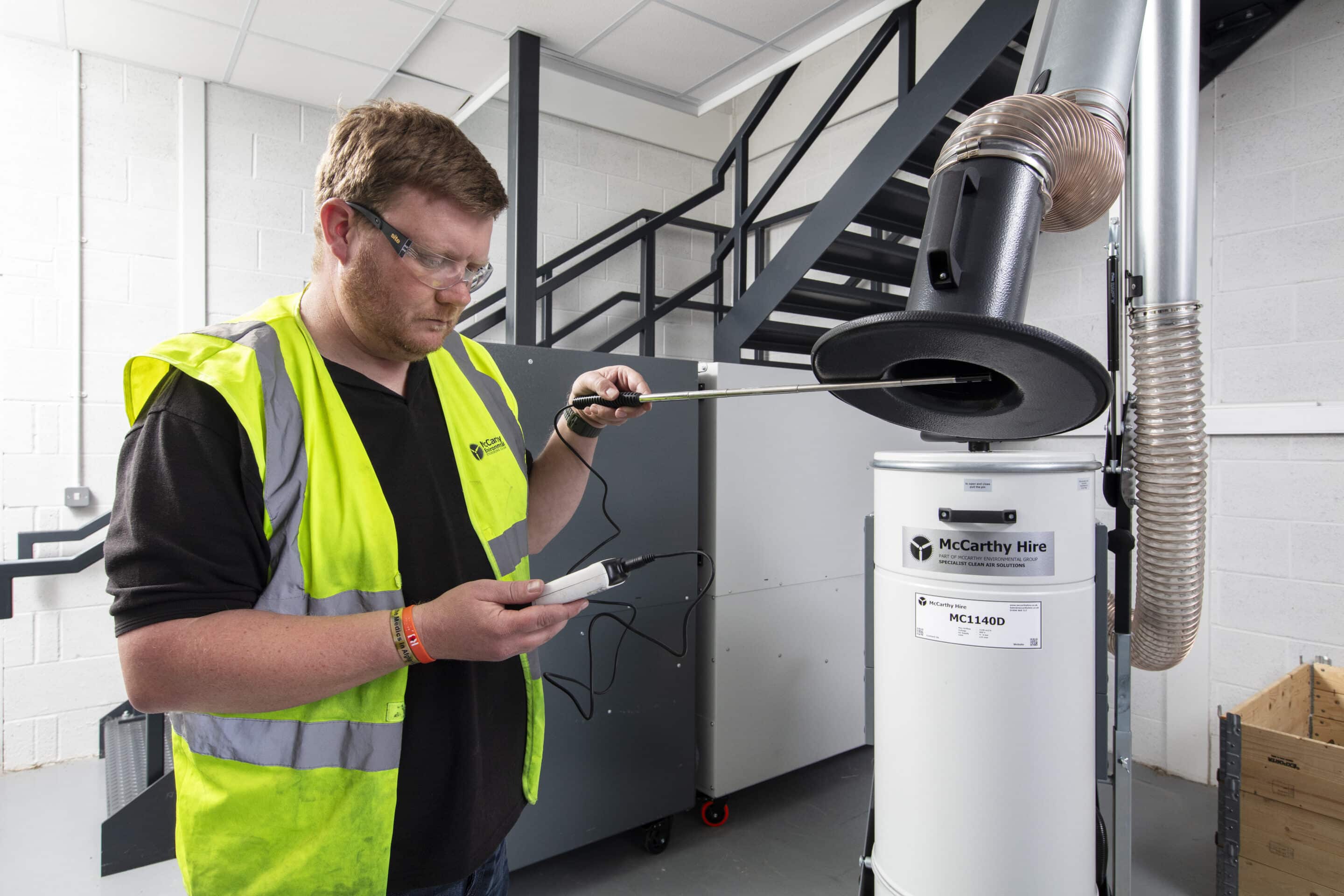
Local Exhaust Ventilation systems capture contaminants at the point they are generated. A typical system includes:
- A capture hood or extraction point
- Ductwork
- An air cleaning unit or filter
- A fan to move the air
- A discharge outlet
The type of system needed depends on the process producing the contaminants.
Our Extraction Services


Types of Extraction Systems
Different work environments will require different types of extraction systems. Below are the most common systems used:
- Fixed Ducted Extraction Systems
- Mobile Extraction Units
- On-Tool Extraction
- Extraction Arms and Capture Hoods
- Downdraft Tables and Benches
- Spray Booth Ventilation
These systems are permanently installed and connected to multiple workstations through a network of ducting.
Commonly used in manufacturing facilities, woodworking, fabrication shops and production lines.
These extraction units are portable and can be moved between work areas. These are often used in environments where workstations change frequently, tasks are mobile or permanent ducting is not practical.
Commonly used in welding and light fabrication work.
These systems connect directly to handheld tools such as sanders, grinders, cutters and drills, capturing dust immediately as it is generated.
Commonly used in construction, woodworking operations and surface preparation tasks.
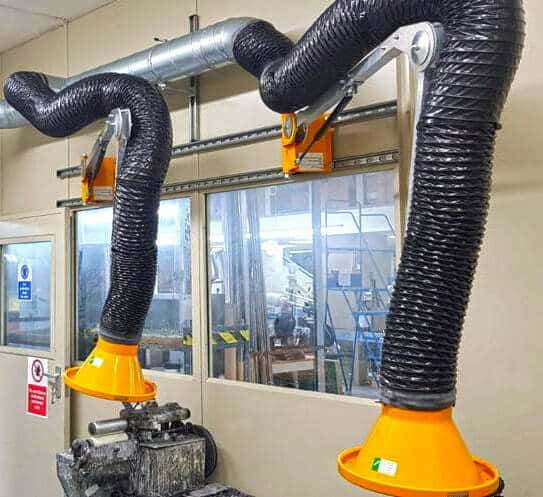
Extraction arms are flexible arms positioned close to the source of contaminants. These are generally used in welding bays, laboratory workstations or chemical handling areas. The benefit of extraction arms is that operators can position the hood close to the point of generation, improving capture efficiency.
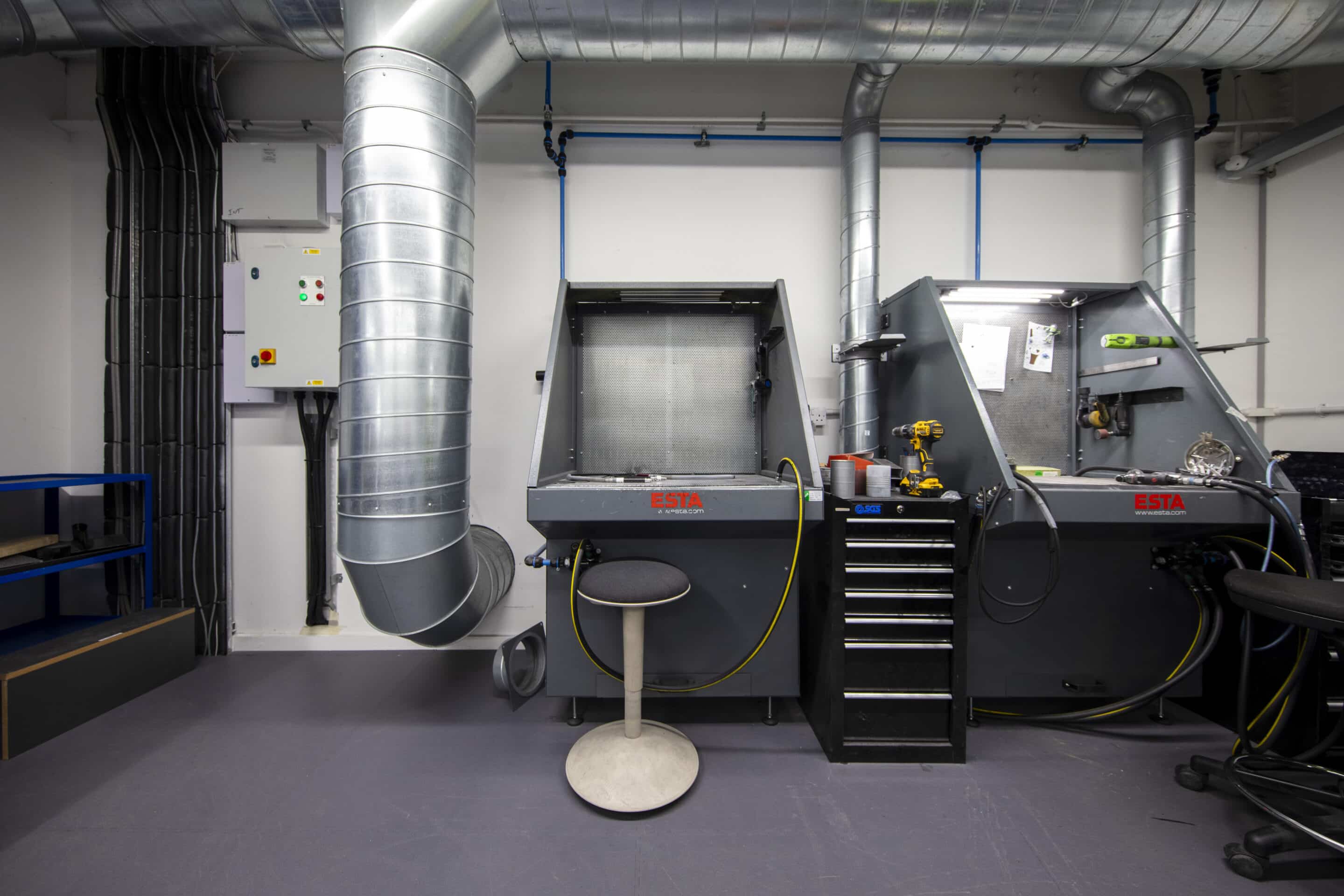
Downdraft benches draw air beneath the work surface. They are commonly used for grinding, sanding, polishing and deburring. These benches capture contaminants before they rise into the employees’ breathing zone.
Spray booths are enclosed environments designed for processes such as spray painting, coating applications and finishing. These systems control airborne paint mist and vapours through controlled airflow and filtration.
How to choose the right extraction system
Selecting the right system requires understanding several key factors.
Important considerations include:
The type of contaminant
Different substances behave differently in the air.
Dust, fumes, vapours, and mists require different capture approaches.
The process generating the contaminant
The extraction design must suit the activity producing the hazard.
Worker interaction
The system must work with how employees perform their tasks.
If workers move around frequently, mobile or on-tool extraction may be required.
Volume of contaminants
High dust production often requires fixed ducted systems with larger airflow capacity.

Why System Design Is Critical
Installing the wrong extraction system can create a false sense of safety.
Poorly designed systems may:
- Fail to capture contaminants
- Allow dust or fumes to spread
- Waste energy
- Lead to failed compliance inspections
Effective systems must be designed specifically for the process and workplace layout.
Professional design ensures the system captures contaminants efficiently and protects workers properly.
Legal Considerations for Extraction Systems
Employers must ensure that airborne contaminants are adequately controlled under the Control of Substances Hazardous to Health Regulations 2002
When LEV systems are used as a control measure, they must also be:
- Maintained properly
- Used correctly by workers
- Thoroughly examined and tested at least every 14 months
This testing confirms that the system continues to perform as intended.
Common Mistakes When Choosing Extraction
Businesses often encounter problems when:
- Selecting equipment designed for a different process
- Installing undersized systems
- Relying on general ventilation instead of LEV
- Failing to consider worker movement
- Modifying systems without reassessing airflow
Taking time to evaluate requirements properly can prevent costly redesigns later.
Finding the Right Extraction Solution
Every workplace is different, and the best extraction system depends on the specific processes and contaminants involved.
Assessing your processes, understanding the hazards, and designing a system that captures contaminants effectively are essential steps in creating a safe and compliant working environment.
If you are unsure what type of extraction your workplace requires, a professional assessment can help identify the most effective solution for your processes and ensure your ventilation systems meet UK legal and safety standards.